
Scientific governance and evidence-based accountability are essential in society / From the gap between university and society to the era of open science
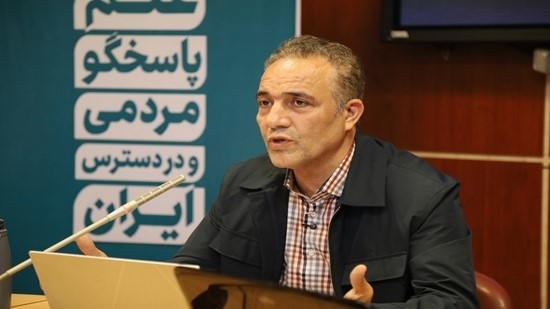
Scientific governance and evidence-based accountability are essential in society / From the gap between university and society to the era of open science.
The Director of the Health Research Center in Accidents and Disasters at the University of Social Welfare and Rehabilitation Sciences, during a protocol writing workshop emphasizing the vital role of principled research and scientific documentation in building public trust, called for the strengthening of scientific governance and the implementation of transparent research protocols to ensure public health and prevent mistrust in health-related decision-making.
According to the university's public relations report, Dr. Hamidreza Khanke, a permanent member of the Academy of Medical Sciences and Director of the Health Research Center in Accidents and Disasters, stated at this scientific event: Iran ranks among the world's leaders in the fields of health and rehabilitation sciences, but we still require more focus and development in areas such as medical and cancer research. A massive portion of the health system must be accountable to studies and scientific evidence; physicians and elites are the primary pillars of public trust, and if scientific methods are not transparent and reproducible, this trust will be damaged and irreparable.
Referring to research errors and scientific misconduct in certain fields, he warned: A lack of transparency in scientific processes can lead to public doubt regarding health-related decisions.
The accurate publication of scientific findings is a researcher's moral duty.
Dr. Khankeh clarified: Governance decisions must be based on evidence, and the accurate and ethical publication of scientific findings is the moral obligation of every researcher. He also emphasized the importance of teamwork and creating scientific networks to foster knowledge growth and reduce misconduct.
The permanent member of the Academy of Medical Sciences added: By socializing science and providing open access to science, the public can be made participants in knowledge production. Currently, the public has no role in knowledge production, or research does not reach the consumer at its golden and appropriate time. In developed countries, there is no wall between the university and society; we too must express the language of science simply for the community, and the Science Slam, held for the first time at the University of Social Welfare and Rehabilitation Sciences, is the beginning of this path.
He added: Open science is the movement of making scientific research, publications, data, and software available, promoting scientific research among all levels of society's questioners at both basic and professional levels, and opening the gates of science to everyone.
Dr. Khankeh stated: Open science includes practices such as open research publishing, fighting for open access, encouraging scientists to open their scientific notes, and generally facilitating the dissemination and communication of knowledge and science.
He remarked: In the socialization of science and open access to science, we must answer questions such as: To what extent are science and scientific findings trustworthy? To what extent are they reproducible with similar results? What is the extent of the public's share and participation in science production? How open is access to data? What is the level of access to scientific products using national resources? To what extent is there transparency in the research process? How much is free access to research training? To what extent does ethical oversight of results increase transparency, trust, and application?
The permanent member of the Academy of Medical Sciences identified four factors—politics, economy, philosophy, and culture—as influencers of open science, adding: We must move toward policymaking based on knowledge.
Dr. Khankeh said: Everyone in the world has the right to know and understand scientific findings in their native and understandable language and to benefit from them; we must witness the improvement of society's quality of life through science, and science should be based on the correct demands of society, where the right needs are demanded.
He added: The independence of universities, whereby they are built with public resources and are not indebted to anyone or subject to restrictive laws, is another instance of open science. We have various charities that perform valuable work such as building schools, mosques, clinics, and caring for the disabled; this is very good and commendable. However, how many charities do we have that build universities and research institutes or provide funds for research needed by society? How many charities spend money on research, technology, and so on? The freedom of the university is one of the great concepts.
Dr. Khankeh concluded: The value of scientists lies not only in their academic degrees; rather, a researcher must be deep, fluid, and responsive to the real needs of society in the realm of knowledge.

نظر دهید