
Continuity of education under energy imbalance conditions general courses to be held virtually and specialized courses in-person
Continuity of education under energy imbalance conditions general courses to be held virtually and specialized courses in-person
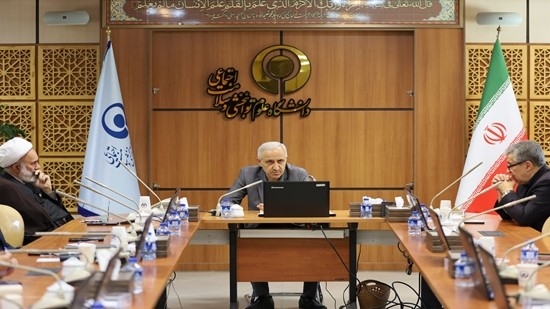
The meeting of the Board of Directors of the university's academic departments and research centers was held in the presence of the University Chancellor, the Chancellor's Advisor, the Vice Chancellor for Education, and the Director of Educational and Graduate Affairs.
According to the report by the university web Day reporter, Dr. Seyed Ali Hosseini, Chancellor of the University of Social Welfare and Rehabilitation Sciences, during the meeting of directors of academic departments and research centers, while thanking the professors for their active participation in conducting educational classes, emphasized the necessity of drafting coordinated programs to resolve student issues, holding regular exams, and organizing intensive internship courses. He called for the active participation of professors in operationalizing these decisions to ensure student educational quality and the coordination of academic departments to enhance the quality of exams and internship courses.
The Chancellor of the University of Social Welfare and Rehabilitation Sciences, referring to the energy imbalance conditions in the coming months, requested faculty members to understand the current situation and support educational programs by cooperating in the scheduling of classes, exams, and educational activities so that the student education process continues with minimum disruption and maximum quality.
The necessity of independence in educational decision-making
In continuation of this meeting, Dr. Hamidreza Khorramkhorshid, Vice Chancellor for Education at the University of Social Welfare and Rehabilitation Sciences, while appreciating the efforts of academic department directors, research centers, and faculty members throughout the semester, addressed the method of conducting exams and student evaluations, particularly at the undergraduate level.
Referring to the discussions and exchanges of opinion among professors in this regard, he stated that there are no specific problems in graduate programs and the evaluation process proceeds based on professors' opinions; however, regarding undergraduate students, it was decided that evaluation would be based on student performance during the virtual period, including attendance, participation in Q&A, and completing educational assignments, with the remaining portion of the grade allocated to the final exam.
The University Vice Chancellor for Education also touched upon topics such as increasing professors' authority in student evaluation, especially under virtual learning conditions, paying attention to students' special circumstances, explaining the Tabib system, the necessity of accurately completing educational information and documentation in this system, professors' teaching fees, and the quality of internship courses.
Emphasis on continuing current class routines and determining the share of in-person exams in the final evaluation
In another part of this meeting, Dr. Dinmohammadi, while appreciating the efforts and cooperation of academic department directors in managing theoretical and clinical education and student affairs during recent special conditions, emphasized the necessity of continuing these collaborations until the end of the academic semester.
In this meeting, which was held to review and decide on current educational challenges and issues, student demands regarding the method of conducting graduate classes for the remaining days of the semester, as well as the quantity and quality of final exams, were reviewed.
After examining various aspects of the subject and considering the proximity of the exam period, as well as the necessity of adhering to educational planning and students' personal considerations, the council members emphasized continuing the current routine of holding classes and not changing the implementation method for the remaining classes.
Based on the decisions made, the first week of the examination period will be dedicated to holding general courses virtually, while other specialized courses will be held in person.
Furthermore, in accordance with the resolutions announced on April 4 (15 Farvardin), it was decided that the student evaluation process will continue to be based on continuous assessment throughout the semester, including active class participation, midterm exams, quizzes, and educational assignments (allocated 10 to 12 points), while the share of the in-person final exam will be set between 8 and 10 points.
At the end, Dr. Dinmohammadi asked the directors of academic departments to encourage professors, with particular diligence, to accurately complete educational information and documentation in the Tabib system, so that the process of recording and evaluating the seven performance aspects of faculty members is carried out optimally.

نظر دهید