
Evaluation Indicators for Research Committees are Shifting from Quantitativism to Quality-Orientation
Evaluation Indicators for Research Committees are Shifting from Quantitativism to Quality-Orientation
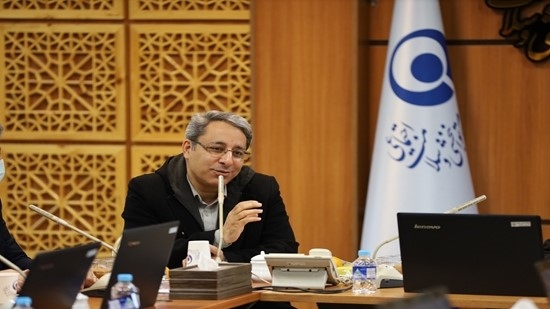
The Secretary of the National Committee for Student Research and Technology of the Ministry of Health, while criticizing purely quantitative approaches in evaluating the performance of student research committees, emphasized the necessity of reviewing indicators, establishing national networking among universities, and guiding students toward problem-oriented research.
According to a report by the University's Web-Day reporter, during the specialized meeting of the Student Research Committees for the Region 10 Statistical Area of the Ministry of Health, Dr. Ali Kabir, emphasizing the need for transformation in university research approaches, stated: The purpose of student research committee activities should not merely be the practice of methodology or gaining points through repetitive conferences and ineffective visits; rather, they must move toward solving real problems within the health system.
The Secretary of the National Committee for Student Research and Technology of the Ministry of Health added: Unfortunately, in recent years, evaluation indicators have been designed in a way that has pushed universities toward quantity-oriented activities. This occurs despite significant differences in the scientific capabilities of various universities, and we must use the quality of research outputs as the criterion for evaluation, regardless of large or small classifications.
Networking: A Solution to Overcome Educational and Research Limitations
Emphasizing the importance of breaking traditional boundaries between medical universities, Dr. Kabir noted: "One of our main programs is the creation of a national network of student researchers." Currently, a network with more than 1,600 active members has been launched and will soon be officially unveiled. Our goal is to enable a student at one university to access the educational capacities, data, and professors of other universities and utilize these capacities to advance their own research projects.
He added: Creating obstacles in the path of students' access to scientific resources or connection with professors is unjustifiable. Students must properly utilize extra-university capacities, both within the Ministry of Health and in other institutions and organizations, and carry out their research with a macro perspective on societal needs.
Students are the Future Builders of the Country and the Health System
Addressing student researchers, the Secretary of the National Committee for Student Research stated: You are the immediate future builders of the health system. The expectation of you goes beyond writing articles and achieving high GPAs; alongside academic learning, you must also experience management skills, professional ethics, and teamwork within research environments.
Referring to the importance of financial resources and research budgets, Dr. Kabir clarified: We are obligated to facilitate students' access to necessary support through proper resource management and optimal budget allocation. Our policy is to support research that can solve problems in the health sector, and in this regard, any administrative bureaucracy that hinders student progress must be reformed.
In conclusion, he expressed hope that through the synergy of the universities in the Region 10 Statistical Area, a successful model for managing student research will be created, allowing other regions to benefit from its experiences to enhance the quality of student research.

نظر دهید