
Fourth-Generation Universities Put Knowledge to the Service of Society
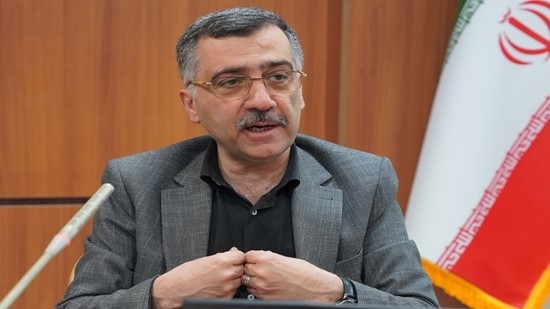
Fourth-Generation Universities Put Knowledge to the Service of Society
The Deputy of Research and Technology at the Ministry of Health, during the Scientometrics Conference of Medical Science Universities, described the fourth-generation university as one whose produced knowledge leads to decisions, policies, behavior, and the improvement of people's quality of life, and emphasized the necessity of knowledge translation and measuring the social impact of research.
According to the report from the university's web correspondent, Dr. Shahin Akhundzadeh, at the twelfth conference of heads and experts of scientometrics departments of the country's medical science universities, titled Smart Scientometrics: Resilience of the Health System and Sustainable Security, noting the position of research in the higher education system, stated: Research remains one of the main pillars of the university, but the evaluation of research performance should not be limited solely to the number of articles, citation rates, or indices such as the impact factor.
Referring to the importance of scientometrics, he added: In recent years, scientometric systems have provided the possibility of evaluating and comparing the scientific activities of researchers and universities, but these systems still face challenges, including the fact that the information of some researchers or articles is not correctly registered in the systems, or that the scientific records of individuals need updating after migration and changing their place of activity.
The Deputy of Research and Technology at the Ministry of Health emphasized: Despite these challenges, creating scientometric systems has been an important step in evaluating scientific activities; however, we must now go a step further and ask what impact the produced knowledge has had on society.
From Article to Social Impact
Dr. Akhundzadeh, emphasizing the necessity of changing the perspective on research evaluation, said: A researcher may have published numerous articles and received significant citations, but the important question is to what extent this knowledge has led to application, problem-solving, policymaking, or service improvement.
He considered knowledge translation to be one of the requirements for medical science universities to move toward the fourth generation, stating: In a fourth-generation university, the production of science is not the end of the work; rather, knowledge must be made available to different groups in society in an understandable language and be able to be converted into decisions and actions.
The Deputy of Research and Technology at the Ministry of Health added: The ultimate goal of the academic and research system in the field of medical sciences should be to help increase life expectancy and improve the quality of life for the people. Therefore, the value of a research activity is not summarized only in its publication in a scientific journal, but its level of impact on community health is also important.
Tools for Knowledge Translation
Referring to various tools for knowledge translation, the Deputy of Research and Technology at the Ministry of Health stated: educational videos, digital content, brochures, media, podcasts, and social networks can play a role in transferring scientific findings to different groups of society.
Akhundzadeh continued, referring to the difference in audiences for knowledge translation: More specialized tools can be used for physicians and specialists; for managers and policymakers, the research message must be presented in a way that is usable in decision-making; and for patients and the general public, simple language and communication tools appropriate for these groups must be utilized.
He also referred to new trends in scientific publication and promotion in reputable journals, saying: In some scientific journals, alongside the publication of an article, an understandable summary of the research findings is also prepared for the general audience.
Publishing simplified scientific content in media and social networks can also broaden the impact of research
.
The Necessity of Revising the Research Evaluation System
Referring to the necessity of reforming the evaluation system for scientific activities, Akhundzadeh said: If universities want to become fourth-generation universities, indicators for measuring the impact of knowledge must be considered alongside conventional scientometric indicators.
He added: Research reaches the desired point when the produced knowledge can be made available to society, used in policymaking, help change behavior, or lead to improved performance and services.
The Deputy of Research and Technology at the Ministry of Health announced this deputy's plan to pay more attention to translation and knowledge impact indicators in the evaluation system, stating: Efforts will be made in the future to ensure that indicators related to knowledge translation are also considered in the systems for evaluating scientific activities, so that researchers, in addition to publishing articles and receiving citations, [can be recognized for their social impact].[can also be evaluated for the actual impact of the knowledge produced].
Referring to the high capacity of basic science researchers, he stated: The valuable activities of basic science researchers should not be evaluated solely by the number of articles. Some researchers may have years of scientific activity, and their
work may have been used in academic books, clinical guidelines, educational content, media, and scientific resources; these should also be recognized in evaluating
scientific impact.
A Fourth-Generation University Must Transform Knowledge into Decisions and Policies
Emphasizing the necessity for medical science universities to move toward the fourth generation, the Deputy of Research and Technology at the Ministry of Health stated: Knowledge translation does not end with the publication of knowledge; rather, the ideal path is for knowledge to be converted into decisions, decisions into policies, policies into behavior, and ultimately into a measurable outcome for society.
Dr. Akhundzadeh, noting that this path guides the university toward becoming fourth-generation, stated: A fourth-generation university is one where the
knowledge produced does not merely remain in scientific articles and journals, but is transferred to society and used
in problem-solving, decision-making, policymaking, and improving people's quality of life.
He added: This matter holds even greater importance in the field of medical sciences; because in addition to education and research, universities have a direct connection to society through the provision of health and medical services, and they must be able to employ the produced knowledge in the path of improving public health and quality of life.
Referring to the start of the academic year and the necessity of maintaining the dynamism of the university environment, Dr. Akhundzadeh said: We must be careful that the atmosphere prevailing in universities does not drift toward hopelessness. For forward movement, both the university and the student require vitality, hope, and motivation, and the light of research must remain lit so that the university remains vibrant and students remain hopeful and active.

نظر دهید