
Manage osteoarthritis with weight management / Every kilogram of weight loss is equivalent to 4 kg of pressure reduction on the joints
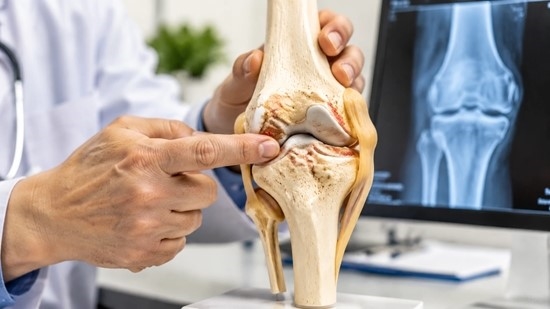
Manage osteoarthritis with weight management / Every kilogram of weight loss is equivalent to 4 kg of pressure reduction on the joints
The specialist in Physical Medicine and Rehabilitation at Rofeideh Rehabilitation Hospital, while explaining the roots of osteoarthritis, emphasized the vital role of weight management, performing strengthening exercises, and correcting incorrect popular beliefs in improving the quality of life for sufferers.
According to a report by the University's Web-Day reporter, Dr. Arezoo Attari, a specialist in Physical Medicine and Rehabilitation at Rofeideh Rehabilitation Hospital, while analyzing the roots of osteoarthritis, stated: Osteoarthritis, or osteoarthritis, is one of the most common joint diseases in the world, characterized by symptoms such as pain, joint stiffness at the beginning of movement, and the creation of sounds when moving the joint.
She added: Although increasing age is the primary risk factor, factors such as overweight, previous joint injuries, weakness of supporting muscles, and hereditary backgrounds play a decisive role in its onset.
The amazing effect of weight loss on joints
Dr. Attari, emphasizing the vital role of weight management in improving the condition of patients, said: Scientific research shows that every kilogram of weight loss is equivalent to a 4 kg reduction in pressure on weight-bearing joints (such as the knee and hip). Therefore, weight control must be prioritized in treatment.
Correcting misconceptions in osteoarthritis treatment
Referring to the existence of incorrect beliefs among the public, this rehabilitation specialist emphasized the necessity of paying attention to scientific methods and added: Contrary to the perception of some who believe that movement and exercise should be avoided if one is affected by osteoarthritis, in fact, strengthening and stretching the supporting muscles (such as the quadriceps muscle in knee osteoarthritis) is the way to save the joint from pain and stiffness.
Dr. Attari also referred to two other common misconceptions: first, that draining excess fluid from swollen joints, contrary to public perception, significantly helps in lightening the joint and reducing pain. Second, contrary to popular beliefs, the topical application of substances such as cabbage cannot reduce intra-articular swelling; however, the oral consumption of some substances like turmeric can be beneficial due to their anti-inflammatory properties.
Nutritional recommendations for pain management
She further recommended that patients, especially middle-aged individuals, use natural combinations with anti-inflammatory properties to reduce pain. The consumption of foods such as sea buckthorn, sesame, cinnamon, ginger, and black cumin is recommended; for example, grinding these substances (except black cumin) and consuming them with milk at breakfast can help in better managing osteoarthritis symptoms.
Dr. Attari concluded by noting: Osteoarthritis does not necessarily mean the loss of mobility; rather, with proper weight management, performing corrective exercises, and following nutritional principles, the quality of life can be significantly improved and the progression of this condition can be prevented. Remember that movement is life; joint health is the foundation of your mobility independence.

نظر دهید