
Examining Structural Challenges of the Family Institution in Facing New Living Patterns and Transient Relationships
Examining Structural Challenges of the Family Institution in Facing New Living Patterns and Transient Relationships
In a specialized meeting examining social developments, an Assistant Professor from the Department of Women and Family Studies at Alzahra University emphasized that the family institution, in facing the new order and the shift of priorities toward individualism, has encountered deep crises in the domain of family formation and the mental health of the young generation; a challenge that can seriously threaten the security and primary foundation of society.
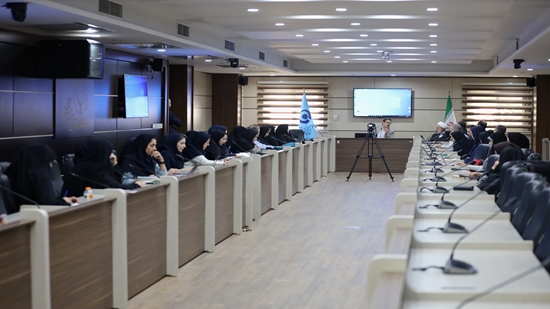
According to the university's web correspondent, Dr. Abolfazl Eqbali, Assistant Professor of Women and Family Studies at the Faculty of Social Sciences and Economics, Alzahra University, stated at the consultative meeting of faculty members of the University of Social Welfare and Rehabilitation Sciences: Despite the challenges and threats arising from the new social order, the family remains the most vital foundation for providing security, emotional support, and tranquility for human beings in this bustling world. Contrary to negative narratives that portray family crises as the sole reality, the truth is that the family is the only institution capable of fulfilling deep human needs, while modern approaches and transient relationships, although they may appear attractive on the surface, often lead to identity crises, psychological anxieties, and emotional insecurities. Therefore, recognizing the innate position of the family and striving to counter the factors that weaken it is a necessity for preserving the health of society and the psychological security of individuals.
At this meeting, he discussed and exchanged views on the challenges facing the family institution in the modern world, adding: With the change in the social order, the family has drifted away from its traditional functions and has encountered new obstacles in the domain of formation and survival.
Dr. Eqbali stated: In today's world, with the expansion of the role of individualism and the prioritization of personal freedoms over collective responsibilities, the family has faced new rivals in the form of transient and multiple relationships. This change in patterns has not only created challenges in the matter of marriage and delays in family formation, but has also led to identity crises, psychological anxieties, and personality disorders among the young generation.
In conclusion, it was emphasized that, despite all media narratives and changes in behavioral patterns, the family remains the only institution capable of answering deep human needs and remains the primary source of emotional and security support for citizens. Preserving its health will be the main condition for the health of the entire society.

نظر دهید