
The Secretary of the Commission of Scientific Associations of the Ministry of Health Emphasized the Necessity of Transitioning from Knowledge Production to Macro-Level Advocacy in the Field of Aging
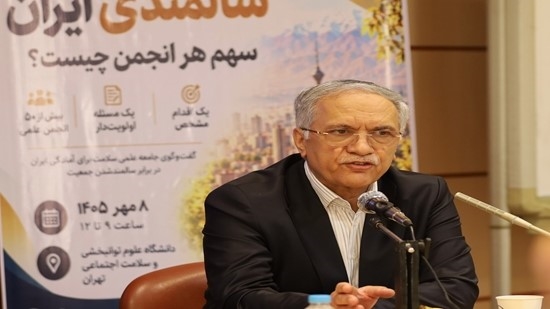
The Secretary of the Commission of Scientific Associations of the Ministry of Health Emphasized the Necessity of Transitioning from Knowledge Production to Macro-Level Advocacy in the Field of Aging
The Secretary of the Commission of Scientific Associations of the Medical Group of the Ministry of Health, while warning about the unprecedented speed of Iran's demographic transition compared to other countries, emphasized the need to shift scientific associations' approach from purely academic activities to social advocacy to change the country's macro-policies.
According to the university's web correspondent, Dr. Mohammad Bayat, Secretary of the Commission of Scientific Associations of the Ministry of Health, Treatment and Medical Education, at the specialized symposium Aging in Iran: What is Each Association's Share?, which was held at the University of Social Welfare and Rehabilitation Sciences on the occasion of the International Day of Older Persons, referring to the high pace of the aging process in Iran, stated: The speed of the demographic transition in our country is much faster than in countries such as Turkey, China, and Malaysia; this reality means there is a very limited opportunity for planning and the necessity of a faster and smarter response from the country's medical and scientific community.
Dr. Bayat, explaining the strategic role of scientific associations, clarified: The inherent duty of these associations is not limited to holding conferences and producing scientific work; rather, their most important responsibility is to bring the concerns of the aging field to the table of the country's decision-makers and policymakers. We must strive through scientific-social pressure to make the issue of aging, including its economic, social, and political needs, become a national priority on the agenda of the legislature and the Ministry of Health.
The Secretary of the Commission of Scientific Associations of the Ministry of Health then analyzed the health coverage situation, noting: Although the rate of insurance coverage for the elderly in Iran is quantitatively favorable, the adequacy of this coverage for meeting the real and multi-layered needs of the elderly's lives is currently low.
Referring to emerging challenges such as the social isolation of the elderly resulting from the migration of children and changes in lifestyle, he emphasized the necessity of rethinking the provision of comprehensive services including psychological, social, and housing support.
Dr. Bayat concluded that aging is an issue beyond the domain of treatment and, emphasizing a multidimensional perspective on this phenomenon, noted: We, alongside the scientific associations, must strive with greater synergy to ensure that the issue of aging moves from a marginal discussion to one of the main priorities in the budgeting and macro-planning of the country's future.

نظر دهید